

Ergonomics first
We'll start with the most important, if for many also the most boring, aspect – ergonomics. Healthy sitting is talked about more and more, but few people really pay enough attention to it. Yet healthy sitting for employees should be a priority for every employer. Why?
Many studies today look at workplaces as a whole, covering all kinds of factors including design, tidiness and suitable furniture. Among the most important aspects that can significantly affect productivity are light, furniture and décor. With furniture, though, design isn't the most important thing – functionality is, and for chairs that specifically means comfort.
One of the most common problems arising from office work is back pain, which affects up to 80% of people. Discomfort when sitting leads to a drop in concentration, productivity and therefore performance, which ultimately costs not only the employer but the whole economy. The good news is that simply replacing furniture can create much better conditions for your employees and make a significant difference almost immediately. According to studies, replacing old, uncomfortable furniture can improve productivity by up to 23%.
The role of design
More and more people are noticing the role of design in our everyday lives. This applies not only to our homes and private spaces, but also to public, community and even work spaces. Office design can significantly influence our productivity and focus. Colours, materials, the amount of natural light, the size of the space itself and many other factors play an important role.
Chairs are of course part of this whole and should fit into a well-thought-out office design. 74% of millennials, who are gradually becoming the dominant workforce (born between 1980 and 1995), see workplace design as a significant factor in how they perceive the whole brand and the company's identity.
Even so, choosing chairs for their design shouldn't focus only on current trends – quite the opposite. Timelessness, elegance and quality are what every age group can appreciate, not only today but in the future too.
So what is the ideal chair?
There is probably no universal recipe for a healthy workplace, since each of us has different preferences. But the basis should be the possibility for individual employees to personalise and adapt their own workstation to their needs. The chair is a very important part of this whole, but it should be just the starting point.
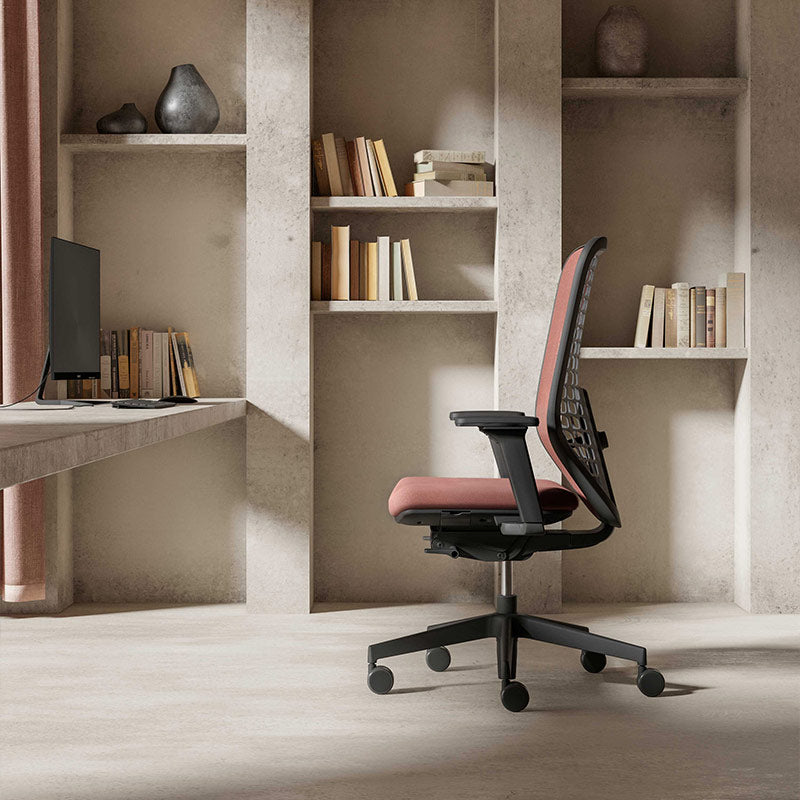
The best solution is ergonomic chairs that support active sitting. This type of sitting can significantly reduce the most common problems arising from office work – from back pain to migraines. It literally makes the user keep their spine in the correct position, which prevents this pain from developing.
A great example is our Vertebro chairs, which:
- support the lower back
- encourage correct shoulder-blade posture through active sitting
- promote correct pelvic posture
- provide suitable head and neck support
- allow a suitable elbow position and thus relieve the trapezius muscles
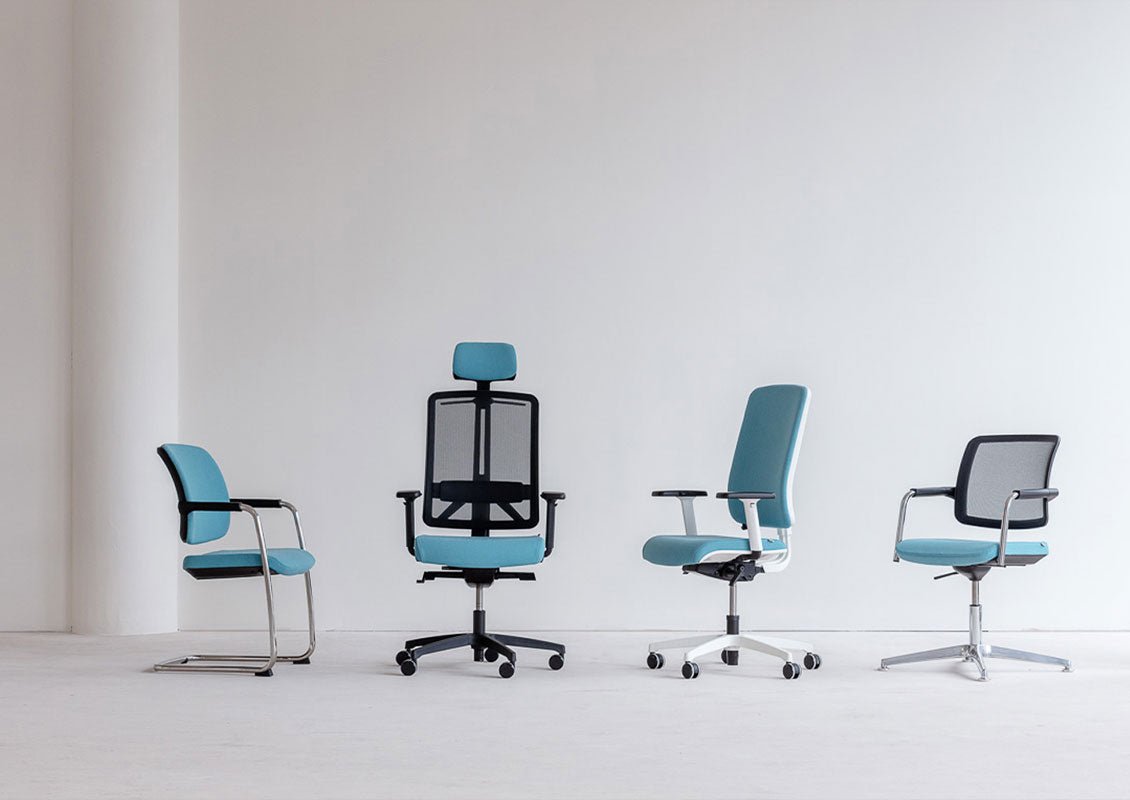
On today's market you'll find all kinds of office chair styles and designs, and many of course don't meet basic ergonomic requirements. Even among the more classic ones there are better and worse models. Focus on office chairs that fulfil their ergonomic role at least in part. They should provide:
- lumbar support (support for the lower back)
- adjustable armrests
- a headrest
What makes a quality ergonomic chair different?
- headrest – relaxes the muscles in the cervical spine area
- backrest + lumbar adjustment – a correctly set lumbar support holds the most curved parts of the spine and brings it into its natural double-S curve. It prevents slouching
- armrests – correctly adjusted armrests help relax the muscles of the neck, shoulders and upper back. It's important to avoid tension when working in a fixed position
- seat – the front edge is rounded so that blood vessels aren't compressed and blood can circulate naturally to the legs. When sitting correctly, it's important to use the whole seat surface and spread the body's weight
- mechanism – a synchronous mechanism lets you set the seat and backrest at the right angle, supporting dynamic sitting
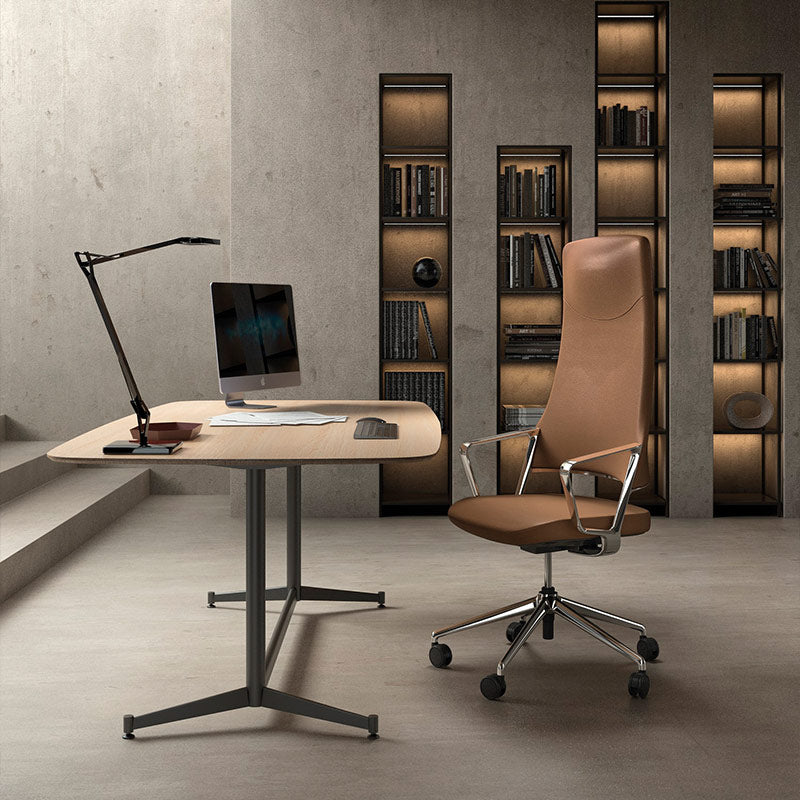
Only when a chair meets these parameters can we move on to design. Here the safest bet is always neutral colours and reliable materials. Nothing is worse for an office and productivity than a pretty but not very practical or poor-quality chair. So choose basic colours such as black or grey, or neutral and natural shades such as beige, brown or muted greens and blues.
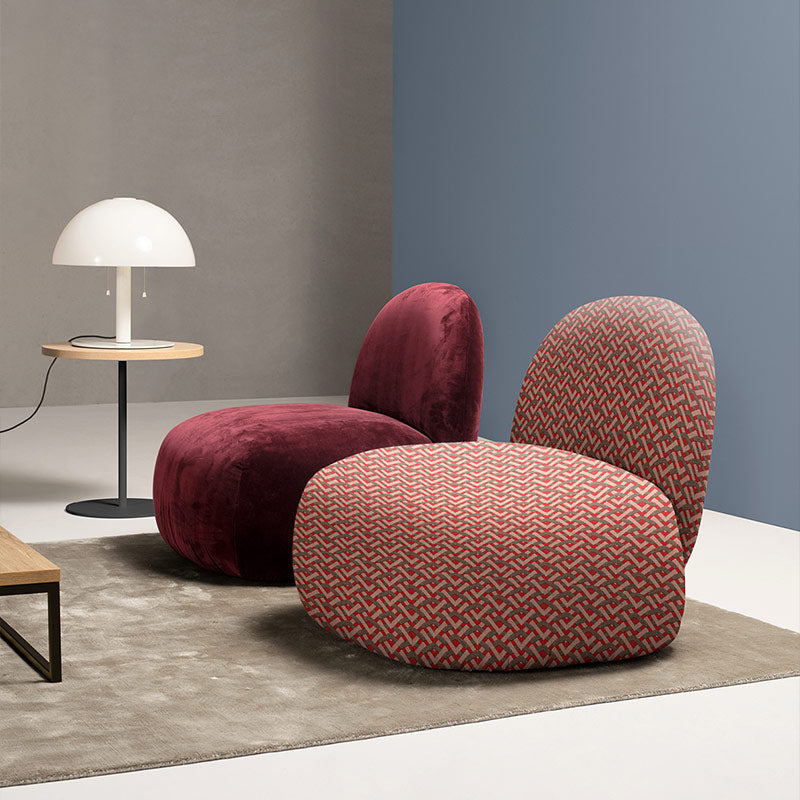
If the chair is an investment you want to rely on for many years, avoid trendy materials, colours and silhouettes that you may tire of or that quickly go out of fashion. Such materials include velvet or bouclé, and such silhouettes include low-back tub chairs without back or elbow support.
Neutral colours fit almost any interior style and are easy to combine. The materials should feel high-quality, whether we're talking about the upholstery or the metal or plastic components. A chair is an investment that should pay you back not only in better productivity and employee satisfaction, but also in "years of service".
In our e-shop you'll find a range of ergonomic office chairs, and you can also see and try the whole ergonomic workstation collection in person at our showroom in Bratislava.
